
Origin & Mining
Where Does Himalayan Pink Salt Come From?
Where Himalayan pink salt comes from, the Salt Range in Pakistan, ancient sea deposits, why it is pink, and how it differs from sea salt.

Himalayan pink salt comes from ancient underground salt deposits in northeastern Pakistan, primarily the Khewra Salt Mine in the Salt Range. Despite the name, the salt is not harvested from high Himalayan peaks. It is rock salt formed when prehistoric seas dried up, leaving thick layers of halite that were buried, folded, and lifted over geologic time.
Geographic source
The Salt Range runs parallel to the Himalayas in Punjab Province, Pakistan. Major mining operations center on Khewra, though related workings exist in the broader region. From there, salt is processed and exported worldwide as culinary salt, lamps, blocks, and bath products.
If you want step-by-step detail on extraction, read how Himalayan pink salt is mined.
Ancient sea to solid rock
Hundreds of millions of years ago, a shallow sea covered parts of what is now South Asia. As water evaporated, minerals crystallized into thick salt beds. Tectonic activity later pushed these beds upward, protecting them under rock until modern mining exposed them.
This origin explains why Himalayan pink salt is chemically similar to other ancient halite deposits, not a unique modern seawater product.
Why is Himalayan salt pink?
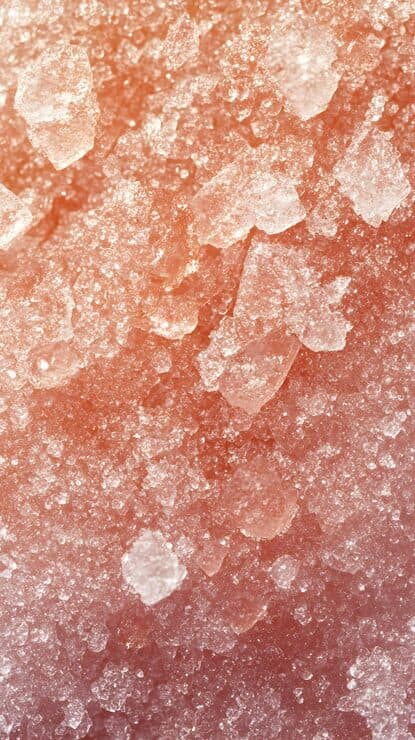
The color is not food dye. It comes from trace iron oxide and related minerals trapped in the crystal matrix. Shades range from pale blush to deep red depending on:
- Depth and layer within the deposit
- Mineral companions in that seam
- How much processing washes or grinds away surface material
Some layers are nearly white; others are vividly pink. Uniform color in retail packaging often means blending from multiple grades.
| Color intensity | Typical cause |
|---|---|
| Light pink | Lower iron oxide concentration |
| Deep red | Higher hematite or mineral inclusions |
| White patches | Purer halite zones with fewer trace minerals |
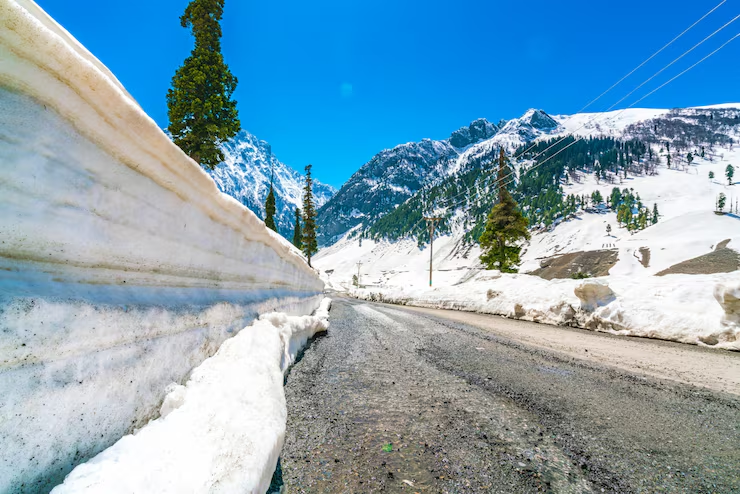
Himalayan pink salt cave experiences
Tourist visits to illuminated mine tunnels are sometimes marketed as "salt cave" therapy. Geologically, these are mined chambers within the halite deposit. Any wellness claims about air quality should be evaluated carefully, humidity, ventilation, and individual health conditions matter more than salt walls alone.
How source affects what you buy
Culinary crystals, crushed and sieved for kitchens.
Rock chunks, for grinders and decorative cellars.
Blocks and slabs, cut from dense, crack-resistant sections for cooking or serving.
Lamps, hollowed or carved chunks with a light bulb inside.
The deposit is the same; the product shape differs. Compare Himalayan salt blocks and slabs and our lamp guide for specialty forms.
Himalayan pink salt vs sea salt by origin
Sea salt is harvested by evaporating current ocean water. Himalayan pink salt was sealed underground long before modern oceans took their present shape. That distinction matters geologically but less so in the kitchen, see Himalayan pink salt vs sea salt for cooking comparisons.
Labeling and authenticity
Look for country-of-origin labeling (Pakistan) from reputable sellers. Extremely cheap "Himalayan" products may be mislabeled rock salt from other regions or dyed salt. Color alone is not proof of source; supplier transparency helps.
Bottom line
Himalayan pink salt comes from one of the world's largest ancient salt deposits in Pakistan. Its pink color is natural, its history is geological, and its culinary role is that of a minimally processed rock salt, best understood with accurate geography rather than mountain mythology.
For a full introduction to uses and composition, see what is Himalayan pink salt.
Frequently Asked Questions
- Is Himalayan pink salt from the Himalayas?
- The name references the Himalayan region, but most commercial pink salt is mined in the Salt Range of Punjab, Pakistan, near the foothills, not from high mountain peaks.
- Why is Himalayan salt pink?
- Trace minerals, mainly iron oxide (hematite), give the salt its pink to red hue. The intensity varies by layer and deposit.
- How old is Himalayan pink salt?
- Geologists date the deposit to hundreds of millions of years ago, when ancient seas evaporated and the salt bed was later buried and uplifted.
- Is all pink salt from Pakistan?
- Most authentic Himalayan pink salt on the global market originates from Pakistani mines, especially Khewra. Other countries have rock salt deposits, but the famous pink variety is tied to this region.
- Is Himalayan pink salt the same as rock salt?
- Yes. It is a type of rock salt (halite) mined from underground deposits rather than evaporated from modern seawater.
Related Reading
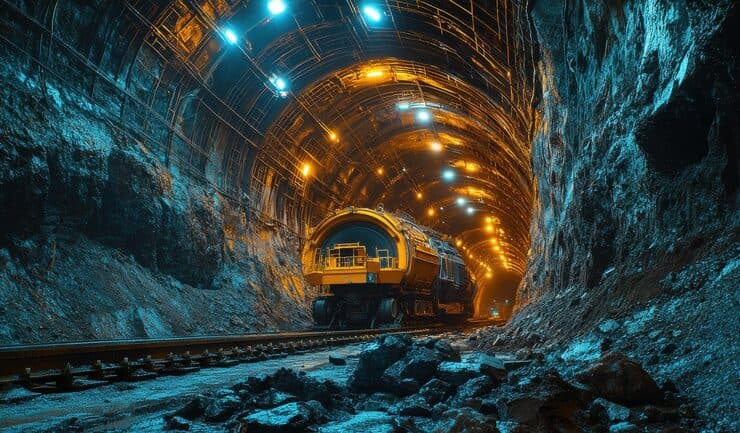 How Himalayan Pink Salt Is Mined
Learn how Himalayan pink salt is mined at the Khewra Salt Mine in Pakistan, extraction methods, safety, processing, and what happens before it reaches your kitchen.
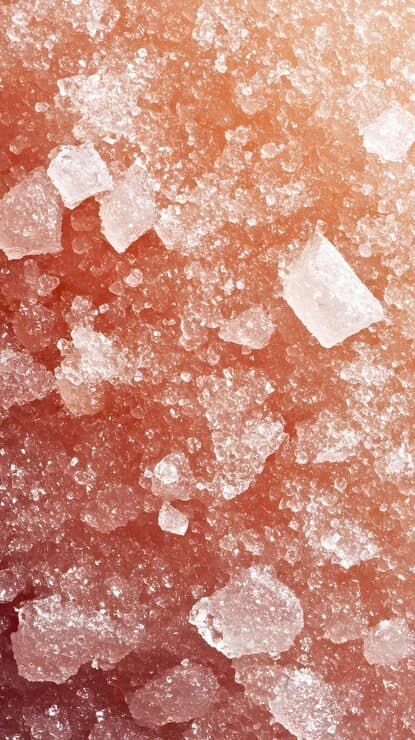 What Is Himalayan Pink Salt?
What Himalayan pink salt is, composition, origin, color, culinary uses, and how it differs from table salt and sea salt.
 Himalayan Pink Salt vs Sea Salt
Compare Himalayan pink salt and sea salt, source, processing, taste, minerals, iodine, and which to use for cooking.