
Salt Lamps
Pink Himalayan Salt Lamp Guide
What Himalayan salt lamps are, how they work, setup and care, leaking moisture, electrical safety, and common benefit claims explained.
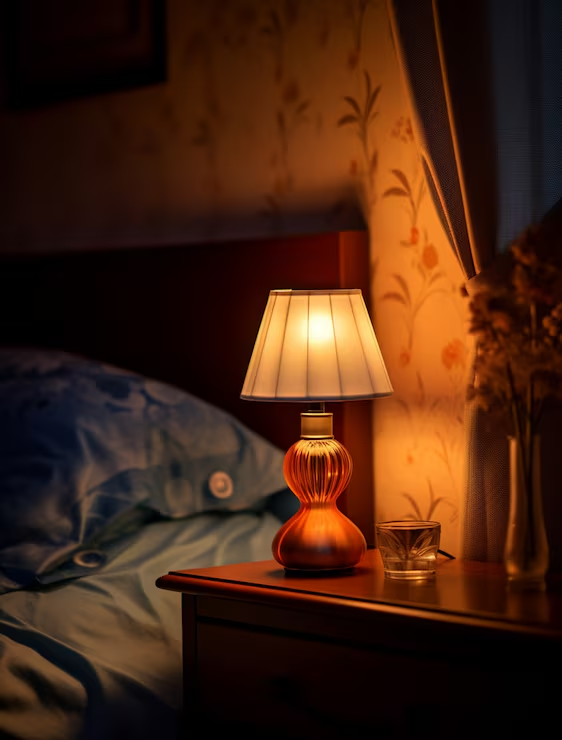
A pink Himalayan salt lamp is a carved chunk of rock salt with a light bulb inside. Turned on, it glows amber-pink and adds cozy light to a room. They are popular decor items tied to wellness marketing, understanding what they actually do helps you enjoy them safely without unrealistic expectations.
What it is made of
Lamps use the same rock salt mined in Pakistan as culinary Himalayan salt, though not all lamp-grade pieces meet food purity standards. The salt is hollowed or mounted on a wooden base with a low-wattage bulb. Color varies from pale peach to deep red depending on the stone.
Learn about the source in where Himalayan pink salt comes from.
How it works (physically)
Electricity heats the bulb. The salt warms slightly, which can reduce surface moisture in humid conditions. Light passes through translucent salt, creating the signature glow. That is the core mechanism, not a complex air-treatment system.
Common benefit claims
| Claim | Reality check |
|---|---|
| Air purification | No strong evidence for meaningful pollutant removal in home settings |
| Negative ions | Lamps produce negligible ions compared to outdoor air or dedicated ionizers |
| Better sleep | Warm dim light may support bedtime routines; salt itself is not a sedative |
| Allergy relief | Not proven; manage allergies with medical guidance and proper cleaning |
If wellness is your goal, prioritize ventilation, dust control, and healthcare advice rather than lamp placement alone.
Setup tips
- Place on a stable, water-resistant base, salt can sweat onto furniture.
- Use the manufacturer's recommended bulb wattage (often 15–25W).
- Keep cord accessible for turning off when away for long periods.
- Avoid bathrooms and damp basements if sweating is a problem.
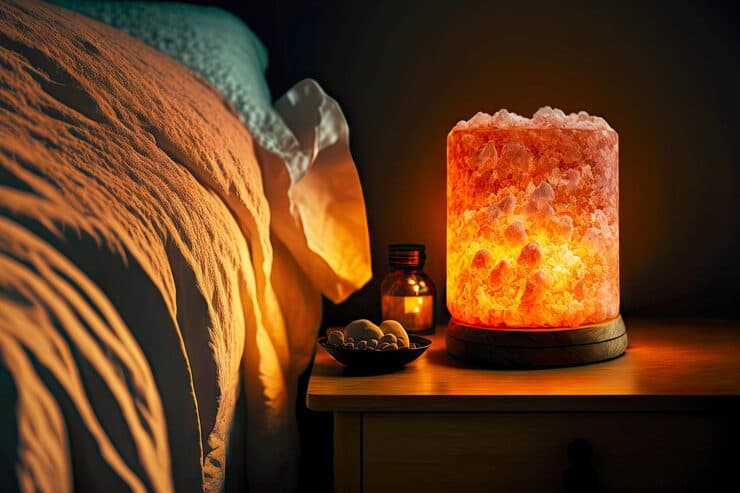
Salt lamp leaking and moisture
Himalayan salt absorbs humidity. In wet climates, lamps can:
- Feel damp to the touch
- Leave salty water rings on furniture
- Shed tiny salt crystals on the base
What helps:
- Run the lamp several hours daily so bulb heat drives off surface moisture.
- Use a coaster or dish under the base.
- Run a dehumidifier in very humid rooms.
- Store off if away for weeks in tropical humidity, seal in plastic if instructions suggest.
This is normal chemistry, not a defect, though poor-quality bases that trap water can worsen corrosion on cords.
Electrical safety
- Buy lamps with certified electrical components for your region.
- Replace frayed cords immediately.
- Do not let moisture pool where cord meets base.
- Keep pets from knocking lamps, salt is heavy and shards are sharp if broken.
Never use a salt lamp as a nightlight near a bathtub or sink.
Cleaning and maintenance
- Unplug and let cool.
- Wipe salt surfaces with a dry cloth; slightly damp cloth for stubborn dust.
- Dry the wooden base; check for salt creep into screw holes.
- Replace bulbs when burned out, handle salt gently when tipping the lamp.
Do not wash with running water, the salt will dissolve.
Salt lamps vs salt blocks
Lamps are for light. Blocks are for cooking. Do not heat a lamp on a stove or grill.
Choosing a lamp
Size affects glow intensity, not health outcomes. Larger stones need stronger bulbs. Look for:
- Solid base with felt or rubber feet
- Certified cord and switch
- Even color if aesthetics matter (natural variation is normal)
Bottom line
Enjoy a Himalayan salt lamp as warm, attractive lighting. Maintain it against humidity, respect electrical safety, and treat health claims skeptically. For edible salt facts, see what is Himalayan pink salt.
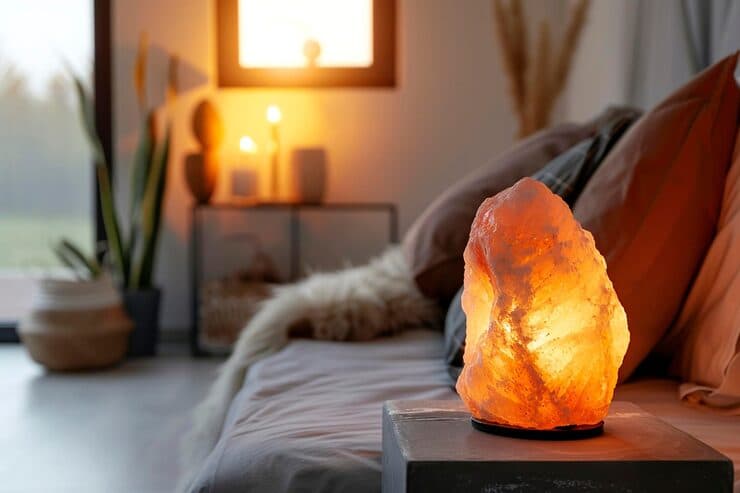
Frequently Asked Questions
- What does a Himalayan salt lamp do?
- It is a decorative lamp made from carved pink salt with a bulb inside. It provides warm ambient light. Claims about air purification or major health benefits are not well supported by independent research.
- Why is my salt lamp leaking water?
- Salt is hygroscopic, it absorbs moisture from humid air and can appear to "weep" or sweat. Keeping the lamp on uses bulb heat to reduce surface moisture. Wipe the base and use in drier rooms if leaking is excessive.
- Are Himalayan salt lamps safe?
- Use a UL-listed or certified cord and bulb wattage recommended by the manufacturer. Keep on a stable, non-flammable surface and away from water. Do not use damaged cords.
- Do salt lamps purify the air?
- Marketing often cites negative ions. Consumer-grade lamps do not produce meaningful air purification compared to ventilation or HEPA filtration. Enjoy them for aesthetics, not as medical devices.
- How do you clean a salt lamp?
- Turn off and cool. Wipe with a dry or slightly damp cloth. Do not immerse in water. Dry the base to prevent furniture damage from salt moisture.
Related Reading
 What Is Himalayan Pink Salt?
What Himalayan pink salt is, composition, origin, color, culinary uses, and how it differs from table salt and sea salt.
 Himalayan Salt Blocks and Slabs Guide
How to use Himalayan salt blocks and slabs for cooking and serving, heating, cooling, cleaning, cracking prevention, and safety tips.
 Where Does Himalayan Pink Salt Come From?
Where Himalayan pink salt comes from, the Salt Range in Pakistan, ancient sea deposits, why it is pink, and how it differs from sea salt.