
Guide
What Makes Himalayan Pink Salt Pink?
Why Himalayan pink salt is pink: iron minerals, crystal structure, color variation, and what color does not tell you about quality.
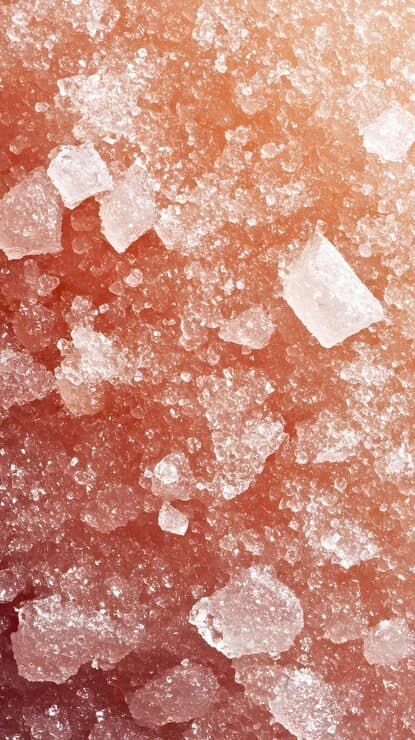
Himalayan pink salt gets its color from trace minerals, mainly iron-bearing compounds, inside halite (rock salt) crystals. The shade can range from pale blush to deep red depending on mineral content and crystal size, not from food dye.
The short answer
Pink color comes from iron oxides and related minerals trapped when the ancient salt bed formed. White crystals in the same bag are still the same salt type with fewer colored inclusions.
What minerals matter
| Factor | Role |
|---|---|
| Iron oxides | Pink to red hues |
| Other trace metals | Minor shifts in tone |
| Crystal cleavage | How light reflects off facets |
These minerals are real but present in small amounts. Color is not a reliable sign of higher nutrition. See composition and nutrition for context.
Uniform vs mixed crystals
Retail bags often blend white and pink chunks. Both are mined from the same geological deposit in Pakistan's Salt Range. Sorting and grinding change appearance without changing the basic product category.
What pink does not prove
- Purity: Color alone does not prove authenticity. Real Himalayan pink salt checks focus on labeling and supplier transparency.
- Flavor: Some cooks prefer coarse pink crystals for finishing; taste differences are subtle compared with grain size and salt level.
- Health benefits: Pink color is not evidence of meaningful extra minerals in a normal diet.
Related reading
Learn where the deposit formed in Himalayan pink salt origin and how crystals are extracted in mining.
Frequently Asked Questions
- Is this information medical advice?
- No. Articles explain general food and product context. Follow your clinician for sodium-restricted diets.
Related Reading
- Himalayan Pink Salt Composition
Chemical composition of Himalayan pink salt: sodium chloride, trace minerals, contaminants, and how it compares to table salt.
 Where Does Himalayan Pink Salt Come From?
Where Himalayan pink salt comes from, the Salt Range in Pakistan, ancient sea deposits, why it is pink, and how it differs from sea salt.
 What Is Himalayan Pink Salt?
What Himalayan pink salt is, composition, origin, color, culinary uses, and how it differs from table salt and sea salt.