
Guide
Himalayan Pink Salt vs Celtic Salt
Compare Himalayan pink salt and Celtic sea salt: source, moisture, minerals, flavor, and cooking uses.
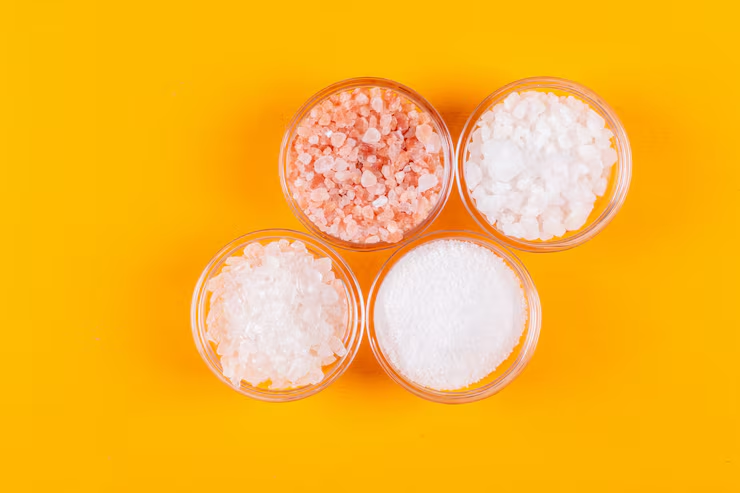
Himalayan pink salt is mined rock salt from Pakistan. Celtic salt is a style of moist sea salt often harvested in France. Both are culinary salts with marketing stories about minerals; both are mostly sodium chloride.
Quick comparison
| Topic | Himalayan pink | Celtic sea salt |
|---|---|---|
| Source | Underground mine | Evaporated seawater |
| Texture | Dry crystals | Often damp, larger flakes |
| Color | Pink from iron minerals | Gray from clay/minerals |
| Iodine | Usually not added | Usually not iodized |
Cooking notes
Celtic flakes are prized for finishing because they cling and melt on the tongue. Himalayan coarse crystals give a similar crunch. Dissolved in bulk cooking, differences fade if sodium level matches.
Health marketing
Neither replaces vegetables, dairy, or fortified foods for minerals. Choose based on texture and price, within sodium limits.
Frequently Asked Questions
- Is this information medical advice?
- No. Articles explain general food and product context. Follow your clinician for sodium-restricted diets.
Related Reading
 Himalayan Pink Salt vs Sea Salt
Compare Himalayan pink salt and sea salt, source, processing, taste, minerals, iodine, and which to use for cooking.
- Himalayan Pink Salt Composition
Chemical composition of Himalayan pink salt: sodium chloride, trace minerals, contaminants, and how it compares to table salt.
- Himalayan Pink Salt for Cooking
How to cook with Himalayan pink salt: baking, grilling, brining, and matching grain size to the recipe.